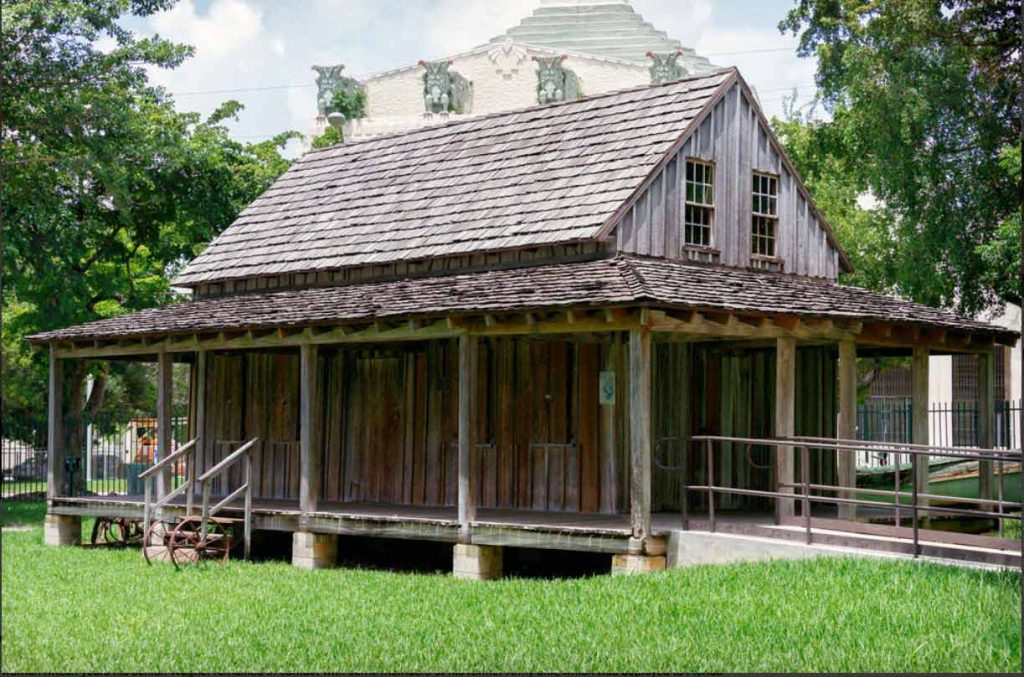
The Wagner story is not just a pioneer tale but it is a story of an inter-racial marriage begun before the emancipation of slaves which survived long into the era of segregation.
Our story begins in 1849 at Charleston when william Wagner at age 25 marries a Creole woman named Eveline Aimar. She is fifteen years older than him and already has children. We do not know if Aimar is her name from a previous marriage or if it is her given or family name.. William Wagner was in Fort Moultrie near Charleston where he was recovering from wounds received fighting in Mexico for the US Army.
In 1851 William Wagner’s term of military enlistment expires. The records show that they have two more children – a boy- William and Elizabeth (Rose) born 1852.
IN 1855 William Wagner comes to Miami. He comes with the troops who are sent to Fort Dallas on the Miami River for the third and last Seminole War. The troops are from the same Company I with whom he had served in Mexico. However Wagner now comes to Miami as a civilian to run a Sutlers store at Ft.Dallas. A Sutler is the name for a shopkeeper for the troops. Wagner is in business partnership with a Capt. Sinclair who has a business running schooners between Charleston and Key West.
Wagner bought with him Eveline’s older children- Octavius and Achilles. There is a good chance that the sutler’s store used this slave’s quarters building.
Sometime shortly Wagner arrived in Miami he built this home and next to it he ran a steam powered Coontie Mill.
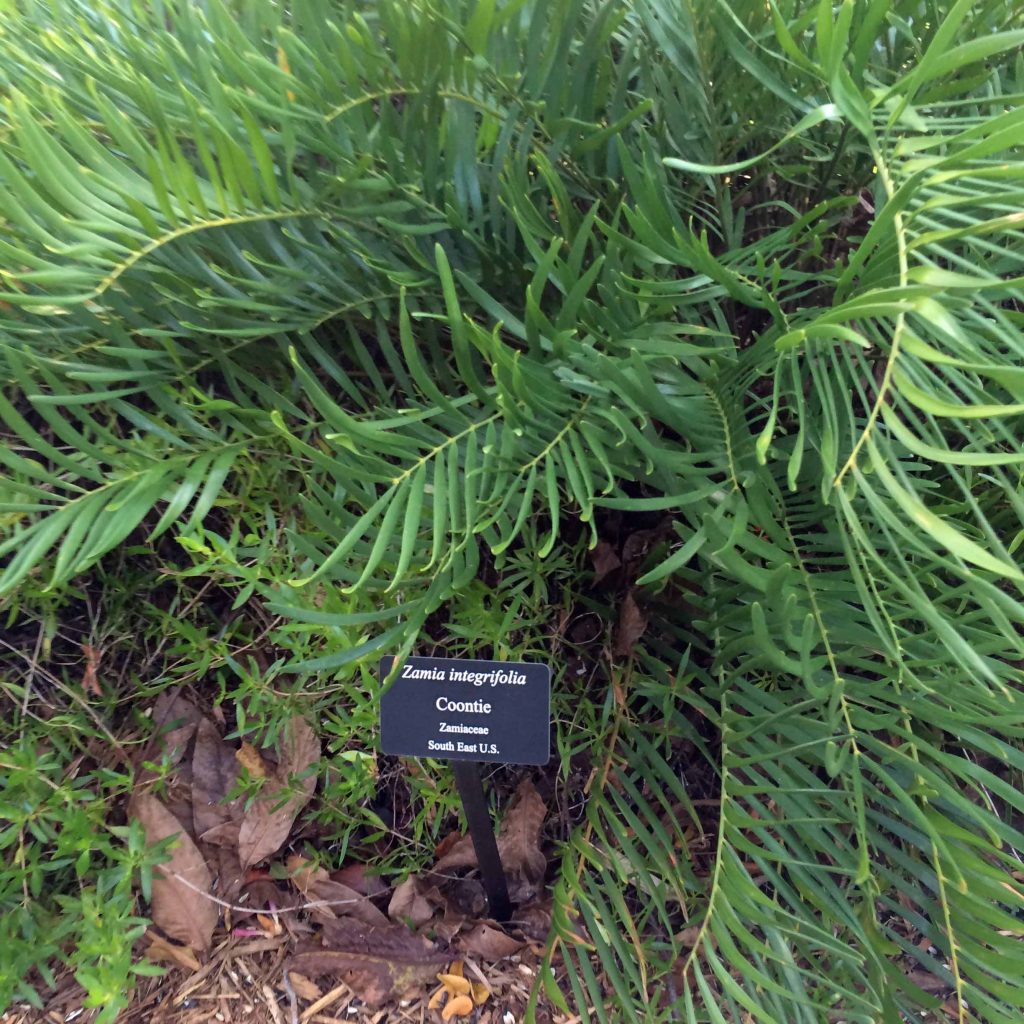

The main industry of the tiny Miami community at that time were its coonti mills. Coonti ( often referred to as arrowroot) was an abundant native cyclad plant whose starch roots could be milled and used like flour. In 1860 Wagners Mill was one of five mills on the River.
In early 1858, Eveline arrives in Miami. William had written to her telling her that it was now safe to come to Miami with the children. In their daughter Rose’s reminiscences she vividly describes her arrival as a 6 year old. She remembers that when they arrived her father and older brothers were not at the Fort so they had to go by horse and cart to their home which was a mile up the river.
One can imagine the reunion of the family. Daughter Rose remembers that they were offered a supper of baked possum and that they turned their nose up at the offering. In her first days in Miami Rose recalls how the Seminole peoples and the other settlers in the community were often visitors at their home. She remembers her father giving the Seminoles clothes and of how he often settled disputes between the them and other settlers.
When peace with the Seminole peoples is made the troops leave. When they go life on the River settlement is very different. They troops had been a big part of the population so things were very quiet.
In 1859 William Wagner’s business partner Capt Sinclair sells his share of the Coonti Mill to William. Economically times were tough on the river. Now that the troops were gone the Wagner’s only business was the Coonti Mill.
The pioneer community was generally a small and friendly group but in 1861 a drunken old neighbor called George Marshall shoots dead the Wagner’s 12 yr old son. Marshall was well known for drinking binges and it seems that he killed the boy in front of Lewis’s Trading Post. At this time there is no sheriff in Miami so Marshall sails away before the nearest sheriff comes all the way from Key West.
In 1861 things changed radically with the beginning of the Civil War. Because of the Union Navy enforced a Blockade of the Florida coast, the settler community of Miami River was cut off from the outside world. They could not get their Coonti flour to market and they had to be completely self-sufficient. At this time their Seminole friends were a great help to them in showing Wagner how to cultivate his own food.
Despite local Union and Confederate differences it seems that community was loyal to one another.
In 1863. George Lewis’s Mill, which was only a short distance away from the Wagner home, was burned down by a posse of Union soldiers. Lewis was being punished for running the blockade. He had made trips to the Bahamas to get supplies. They also took him away and the Wagners looked after his personal effects. They also took in Lewis’s elderly former slave Mr. Benjamin Tiler. Tiler stayed with the Wagner’s until his death in 1869.
After the Civil War a new chapter in Miami begins in 1866. A Carpetbagger named William Gleason comes into town and he occupies the English family plantation properties, which include the Slave Quarters building. He pretends that he legally owns the land which is nothing but a bold faced lie. Gleason arrival has a big effect on small settler community. Gleason is a shrewd and not very honest political operator and is soon the state representative. Two years later he is even briefly Lieutenant Governor of Florida
In 1869, Gleason questions the legality of William Wagner’s marriage to ban him from voting. Presumably Wagner would not have voted for Gleason. The Wagners have to get a letter that shows that they were married by the army.
However in 1870 Gleason is forced off the English’s lands by the new but real owner of the properties.- a Dr.Jethra Harris. Dr. Harris is to become a good friend of the Wagners and like them he gets on well with Indians.
That same year Harris and Wagner and many others in the community are involved in salvaging lumber from a ship that is wrecked off Key Biscayne. As a result of this wreck, Wagner and several other from Miami faces charges in Key West. It seems that the court deems their salvage as theft. Wagner has to spend 60 days in a Key West jail for his role in the salvage. His daughter Rose remembers that in jail he is fed grits and dirty water for coffee.
In 1873 a Yellow fever epidemic hits settlement. Eveline and William’s son-William Wagner Jr. is close to death and Dr. Harris had given up on him. However their son is cured by a Native-American. At this time there was another scare of a native attack but the Wagners seemed to have calmed the situation.
In 1873 Vice President Schuler Colfax plus two senators come to dinner with the Wagner’s. They were been shown the Everglades and on their way back into Miami. One of Eveline’s sons had been their guide.
They joined the Wagners for dinner where they ate turtle and Coonti pudding for which Eveline was famous for.
In 1875 Wagner build first Catholic Church since the Spanish were in the area. The wooden church stood next to their home. Once a year the Bishop from Saint Augustine would come down to the settlement to conduct services.

1876 Rose Wagner is married to Adam Richards at their church. Adam had been living with Wagners and he had helped them run the Coontie Mill. The wedding was a big social event and the many Native Americans come to the celebration.
After Rose’s Wedding the Wagners’ life seem to go down hill. 1888 is a terrible year for the family. The Coontie market collapses and, as a result, the mill has to close. William is getting old but in that same year he gets his army pension.
Worse still: Eveline dies aged 78. It is likely she would have been buried on the Wagner land near the church.
The 1890’s are no better for the Wagners. In 1893 Wagner sells his house and his land to Julia Tuttle. He moves in with Rose and her husband Adam who have a farm in what is now part of South Miami. In 1895 their church burns down and Rose’s children cannot attend Coconut Grove School because of their dark skin tones.
However, in 1899 Wagner gets his house back because Tuttle at her death had not fully paid. He moves back to his house but is only there two years before he dies in 1901.
1901 Wagner dies. A new City is rising around him. He is buried at the Miami Cemetery and Rose and her husband were buried next to him.

